

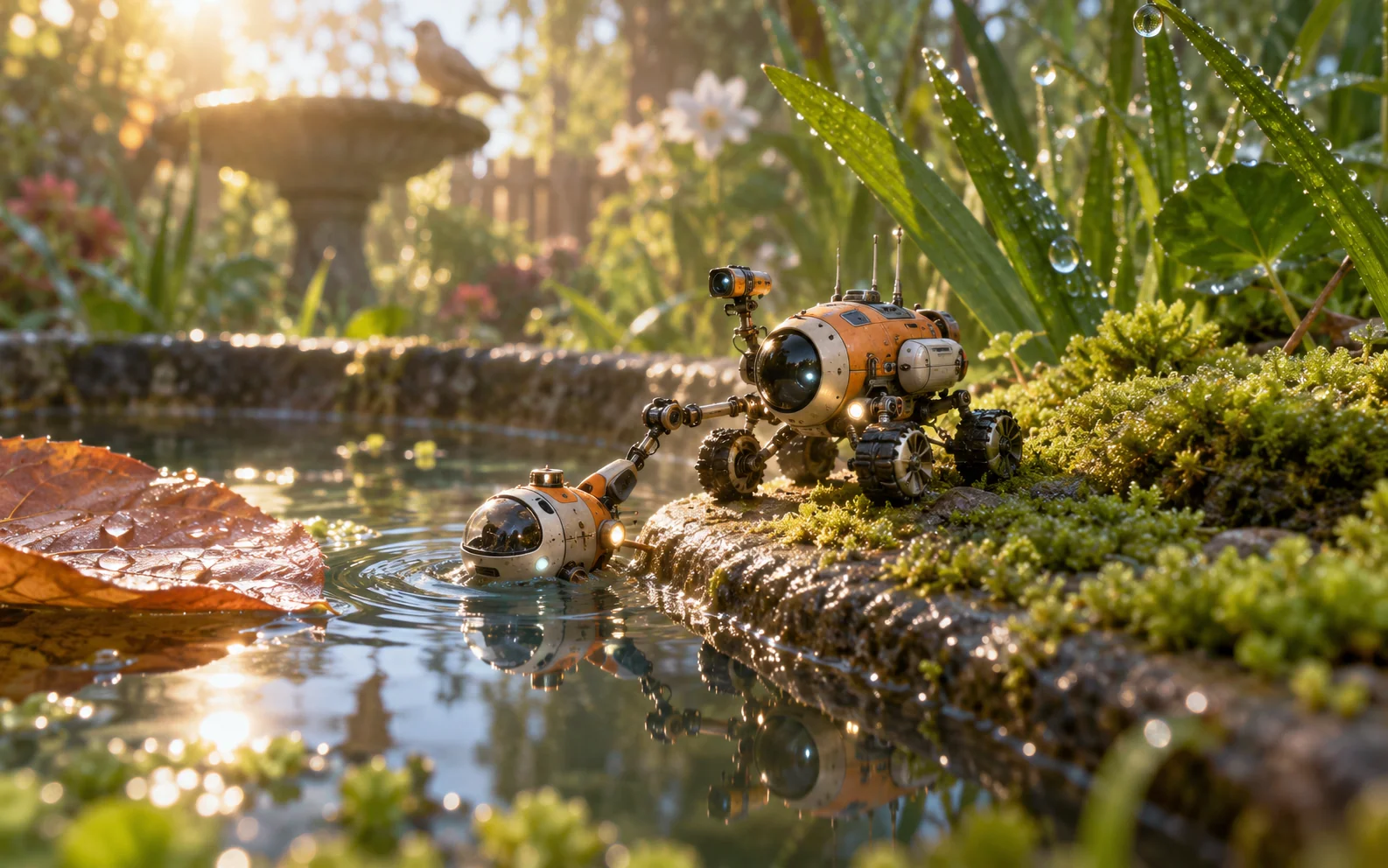
Mission control is under a flowerpot. The deep-space antenna is a bent paper clip. At 07:04, Pebble rolls down a ramp made from a lolly stick and becomes the first member of the expedition to encounter a worm.
Initial reports describe an “uncooperative flexible terrain feature.” The classification is quickly revised.
Big discoveries. Small footprint.
The crew has three possible destinations. A leaf drifts across the Birdbath Sea. A moss forest conceals a canopy at knee height, provided your knees are very close to the ground. Beyond it, a broken terracotta pot forms a ridge with a gap in the middle.
Your job is to choose a machine and an instrument that can answer a particular question, then get the machine home. The expedition is deliberately simple. A camera cannot do a tether’s job. Good software cannot make a boat climb a hill.
“We have discovered a second sun.”— Pip, shortly before learning about the porch light
What is imagined?
The crew, destinations, energy units and mission results are fiction. Each outcome is a written branch, not a live robot simulation or shared vote. Your last 30 field logs stay in this browser and can be exported.
The underlying idea is practical: match the body, sensing and recovery plan to the environment. To see what very small real machines have demonstrated, follow the evidence in our scale explorer.
FOLLOW THE REAL RESEARCHHow small can a robot get?
And what changes when it does?